






A child’s first dental visit is an important milestone that can help shape their attitude toward oral health for years to come. For many parents, however, it can also bring questions about when to schedule the appointment, what to expect, and how to help their child feel comfortable.
The good news is that with a little preparation, your child’s first dental visit can be a positive and enjoyable experience. Early dental care helps establish healthy habits, identify potential concerns, and build confidence in visiting the dentist.
At SmileOn Dental Findlay Creek, we strive to make every child’s dental experience comfortable, educational, and fun. Families trust our team to provide gentle, compassionate care that helps children feel at ease while supporting healthy, growing smiles
When Should a Child First Visit the Dentist?
According to the Canadian Dental Association, children should visit a dentist within six months of their first tooth appearing or by their first birthday, whichever comes first.
Many parents are surprised to learn that dental visits should begin so early. These appointments allow dentists to:
- Monitor oral development
- Check for early signs of decay
- Discuss proper oral hygiene
- Provide feeding and teething guidance
- Help children become familiar with the dental environment
Early visits can help prevent problems before they start.
Why Early Dental Visits Matter
Baby teeth play a much bigger role than many people realize. Although they are temporary, they are essential for a child’s growth and development. Healthy baby teeth help children chew properly, speak clearly, maintain space for permanent teeth, and develop positive oral health habits from an early age.
Keeping baby teeth healthy supports proper oral development and can reduce the risk of future dental complications. Regular dental visits and good oral hygiene habits help ensure your child’s smile stays healthy as they grow.
Talk Positively About the Dentist
Children often take emotional cues from their parents, so the way dental visits are discussed can greatly influence how they feel. Using encouraging language helps create a positive experience and can reduce anxiety about visiting the dentist. This approach supports a calmer and more confident mindset before the appointment.
Instead of saying things like “Don’t be scared” or “It won’t hurt,” try using positive and reassuring phrases such as “The dentist will count your teeth,” “We’re going to help keep your smile healthy,” or “The dental team will show you how strong your teeth are.” Positive language like this helps children feel more comfortable and curious about their visit, while also building a healthy attitude toward dental care.
Read Books About Dental Visits
Children often feel more comfortable when they know what to expect before a dental visit. Reading age-appropriate books about dental appointments can help introduce basic dental concepts, reduce fear of the unknown, and even build excitement about the experience.
Another helpful approach is role-playing at home. You can let your child pretend to be the dentist and count your teeth, then switch roles so you can gently examine theirs. This simple and playful activity helps make the dental visit feel more familiar and less intimidating.
Choose the Right Appointment Time
Young children tend to have the most positive dental experiences when they are well-rested, fed, and comfortable. Planning ahead can help ensure your child arrives at the appointment feeling calm and ready for the visit.
For many families, morning appointments work best because children are often more alert, cooperative, and in a better mood earlier in the day. Whenever possible, try to avoid scheduling dental visits during your child’s usual nap time, as tiredness can make appointments more challenging.
What Happens During the First Dental Visit?
The first appointment is typically focused on helping your child feel comfortable. Depending on your child’s age and cooperation level, the visit may include:
A Gentle Examination
The dentist will examine:
- Teeth
- Gums
- Jaw development
- Oral tissues
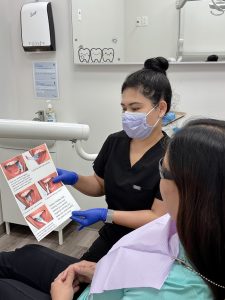
Oral Hygiene Guidance
Parents receive advice on:
- Brushing techniques
- Flossing
- Fluoride use
- Healthy eating habits
Questions and Discussion
This is an excellent opportunity to discuss concerns regarding:
- Thumb sucking
- Pacifier use
- Teething
- Tooth eruption

The goal is to provide education and establish a positive relationship with dental care.
Bring Comfort Items
Bringing a favorite toy, stuffed animal, or blanket can help younger children feel more secure during their dental visit. Familiar comfort items provide reassurance in a new environment, helping children feel more relaxed and reducing anxiety throughout the appointment.
Avoid Sharing Negative Dental Experiences
Even casual comments about unpleasant dental experiences can influence how children feel about visiting the dentist. To help reduce anxiety before a first dental visit, try to keep conversations about dental care positive and reassuring. Children who hear encouraging messages are more likely to feel comfortable during appointments and develop healthy attitudes toward dental care as they grow.
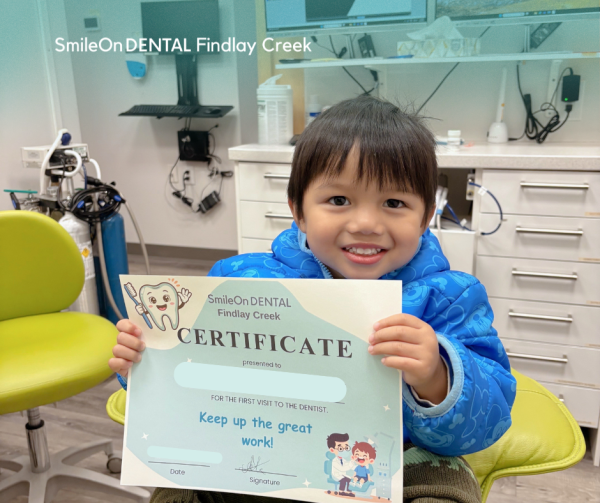
Celebrate the Experience
After the appointment, be sure to praise your child for their cooperation and bravery. Positive reinforcement can help build confidence and create a more positive attitude toward future dental visits. Simple rewards such as extra story time, a family outing, or a special activity can make the experience feel rewarding without relying on sugary treats, which are best avoided whenever possible.
To learn more about preparing your child for their first dental visit, visit the Canadian Dental Association’s First Dental Visit Resource.
Tips for Maintaining Healthy Smiles at Home
Between dental visits, encourage healthy habits such as:
- Brushing Twice Daily – Use a soft-bristled toothbrush and age-appropriate fluoride toothpaste.
- Flossing Daily – Flossing removes plaque from areas toothbrushes cannot reach.
- Drinking Water – Water supports healthy teeth and helps rinse away food particles.
- Choosing Tooth-Friendly Snacks – Healthy choices include cheese, yogurt, fruits, and vegetables.
Frequently Asked Questions About Your Child’s First Dental Visit
- How long does a first dental visit take? Most first visits are relatively short and focus on examination, education, and helping the child feel comfortable.
- What if my child cries during the appointment? This is completely normal. Dental teams experienced in children’s care understand that young children may feel uncertain in new situations.
- Should I stay with my child during the visit? In most cases, parents are encouraged to remain present, especially during a child’s first appointment.
- Are baby teeth really important if they eventually fall out? Yes. Baby teeth support speech development, eating, and proper alignment of permanent teeth.
Help Your Child Build a Lifetime of Healthy Smiles
A positive first dental visit can lay the foundation for excellent oral health and confidence in dental care. With early preventive visits and supportive guidance, children can develop healthy habits that last a lifetime.
At SmileOn Dental Findlay Creek, we are dedicated to creating comfortable, welcoming experiences for children and families throughout our community.
Schedule your child’s first dental visit today and help them start their oral health journey with a smile.