






If it has been a while since your last dental visit, you may wonder what actually happens during a dental exam and cleaning. For some patients, not knowing what to expect can make booking an appointment feel a little intimidating.
The good news is that a routine dental exam and cleaning is a straightforward part of maintaining your oral health. It gives your dental team an opportunity to check for potential concerns, remove plaque and tartar, and help you maintain a healthy smile.
At SmileON Dental Findlay Creek, we take the time to make every visit comfortable, informative, and personalized to your needs. Here’s what you can typically expect during a dental exam and cleaning.
Why Are Regular Dental Exams and Cleanings Important?
Even if your teeth feel fine, regular dental visits can help identify problems before they become more serious.
Some dental issues, including early cavities and gum disease, may not cause noticeable symptoms right away. A professional dental exam allows your dentist to assess your teeth, gums, and overall oral health and identify areas that may need attention.
Professional cleanings are also different from brushing and flossing at home. Your dental hygienist can remove hardened tartar that cannot be removed with a regular toothbrush.
Regular dental visits can help you:
- Maintain healthy teeth and gums
- Remove plaque and tartar buildup
- Detect cavities and other dental concerns early
- Monitor your gum health
- Keep track of changes in your oral health
- Maintain good oral hygiene habits
Step 1: Your Dental Health History
Your appointment may begin with a review of your dental and medical history.
Your dental team may ask about:
- Any current dental concerns
- Tooth sensitivity or discomfort
- Changes you have noticed in your mouth
- Medications you are taking
- Your brushing and flossing routine
- Previous dental treatments
It’s important to let your dental team know about any changes since your last visit. Even something that seems minor, such as occasional sensitivity or bleeding when flossing, can provide useful information about your oral health.
Step 2: Your Dental Exam
Next, your dentist will examine your mouth to look for signs of potential dental problems.
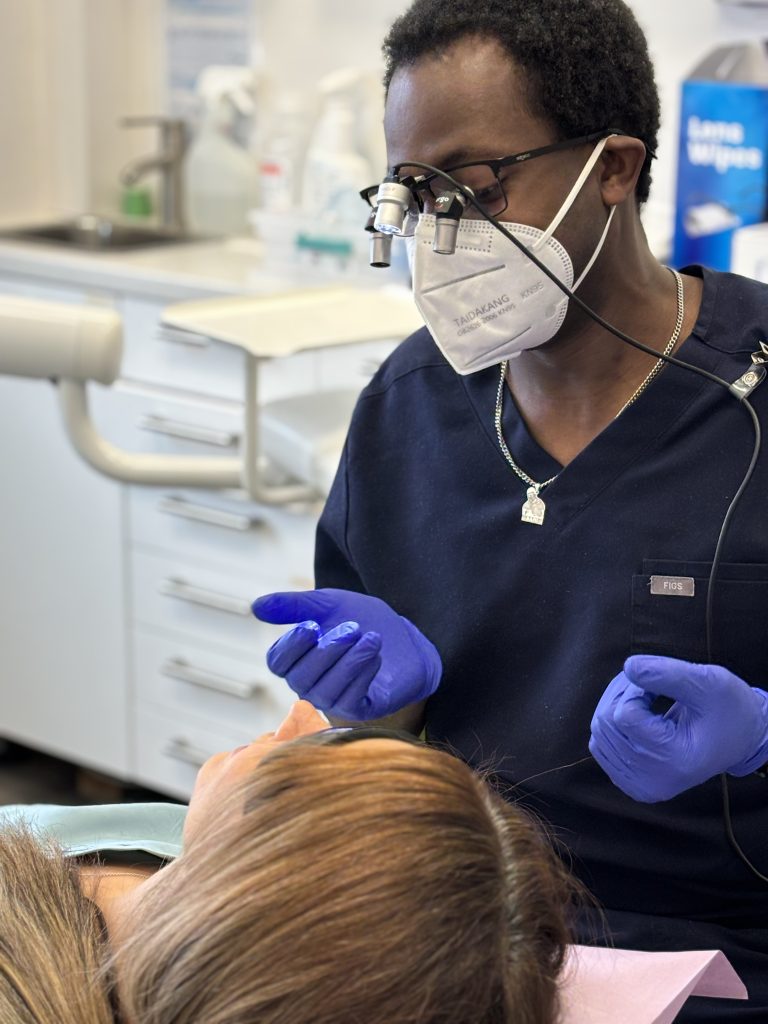
During the exam, your dentist may assess your:
- Teeth – Your dentist will look for signs of cavities, cracks, chips, worn areas, or other changes affecting your teeth.
- Gums – Your gums will be checked for signs of inflammation, swelling, bleeding, or other indications of gum disease.
- Existing Dental Work – If you have fillings, crowns, bridges, implants, or other dental restorations, your dentist may check their condition to make sure they continue to function properly.
- Overall Oral Health – Your dentist may also examine other areas of your mouth, including the tongue, cheeks, and surrounding tissues.
The goal is to develop a clear picture of your current oral health and identify anything that may require further attention.
Step 3: Dental X-Rays When Needed
Depending on your dental history, age, symptoms, risk factors, and the findings from your exam, your dentist may recommend dental X-rays.
X-rays can provide information that cannot be seen during a visual examination. They may help your dental team identify concerns such as cavities between teeth, changes around the roots of teeth, bone loss, or other conditions.
Not every patient needs X-rays at every appointment. Your dentist will recommend them when they are appropriate for your individual needs.
Step 4: Professional Dental Cleaning
After the examination, your dental hygienist will perform your professional cleaning.
The cleaning typically involves removing plaque and tartar from your teeth, particularly in areas that can be difficult to clean thoroughly at home.
Your hygienist may use specialized dental instruments to gently clean around the teeth and along the gumline.
What Is Tartar?
Plaque is a sticky film of bacteria that develops on your teeth. When plaque is not removed effectively, it can harden into tartar, also called calculus.
Unlike plaque, tartar cannot be removed with regular brushing and flossing. Professional dental cleaning is needed to safely remove it.
Step 5: Polishing Your Teeth
After removing plaque and tartar, your hygienist may polish your teeth.
Dental polishing can help remove certain surface stains and leave your teeth feeling smooth and clean.
It can also make it more difficult for plaque to adhere to the tooth surfaces immediately after your cleaning.
Step 6: Fluoride Treatment May Be Recommended
Depending on your individual needs, your dental team may recommend a fluoride treatment.
Fluoride helps strengthen tooth enamel and can help protect teeth against decay. Your dentist or hygienist can determine whether a fluoride treatment would be beneficial based on factors such as your cavity risk and oral health.
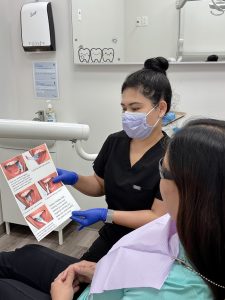
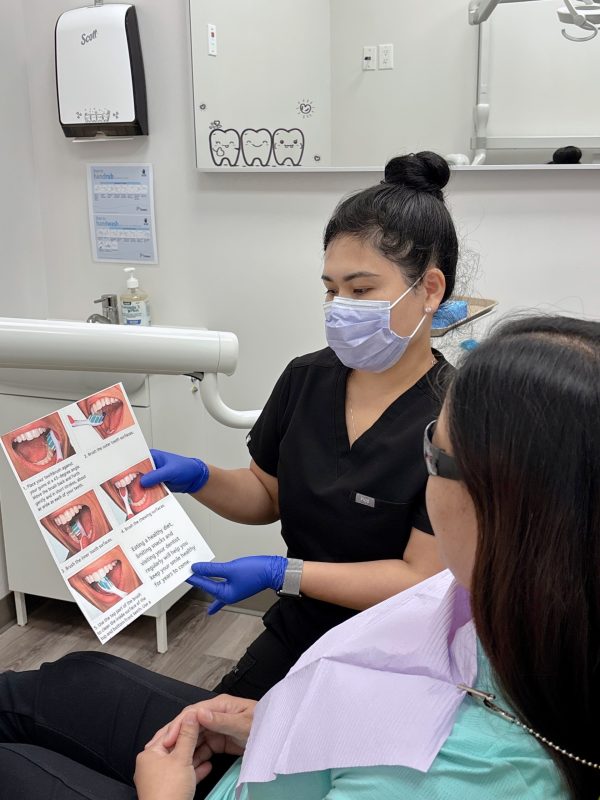
Step 7: Personalized Oral Hygiene Advice
A dental cleaning is also an opportunity to discuss your daily oral hygiene routine.
Your hygienist may provide guidance on:
- Brushing technique
- Flossing or interdental cleaning
- Choosing oral hygiene products
- Managing plaque buildup
- Areas that may need extra attention
Everyone’s mouth is different, so your dental team can recommend habits and products that are appropriate for your needs. Looking for more tips to keep your teeth and gums healthy? Learn more about the basics of good oral health.
How Long Does a Dental Exam and Cleaning Take?
The length of an appointment can vary depending on your oral health, whether you are a new or returning patient, and what services are needed.
A routine appointment may include your exam, cleaning, X-rays when indicated, and time to discuss any concerns or recommendations.
If additional treatment is needed, your dental team can explain the next steps and help you understand your options.
Will a Dental Cleaning Hurt?
For most patients, a routine dental cleaning is comfortable. However, some people may experience temporary sensitivity, particularly if they have sensitive teeth, significant tartar buildup, or gum inflammation.
If you experience discomfort during your appointment, let your dental hygienist know. They can adjust their approach and help make you more comfortable.
If you have avoided dental appointments because you are nervous about treatment, let your dental team know before your visit. Open communication can help your team provide a more comfortable experience.
What Happens If My Dentist Finds a Problem?
A dental exam does not automatically mean you need treatment.
If your dentist identifies a concern, they will explain what they found and discuss the available options with you. Depending on the situation, your dentist may recommend monitoring the area, improving your home care, or scheduling a follow-up treatment.
The earlier a problem is identified, the more options you may have for managing it.
How Often Should You Have a Dental Exam and Cleaning?
There is no single schedule that works for everyone.
Your dentist can recommend an appropriate appointment frequency based on your oral health, gum health, cavity risk, dental history, and other individual factors.
Some patients may benefit from more frequent professional cleanings, while others may require less frequent visits.
The important thing is to follow the schedule recommended by your dental team.
What Should You Do Before Your Appointment?
You don’t need to do anything complicated before a routine dental exam and cleaning.
Continue your normal brushing and flossing routine, and make a note of any questions or concerns you would like to discuss with your dentist.
It can also be helpful to let your dental team know if you have recently experienced:
- Tooth pain
- Sensitivity
- Bleeding gums
- Bad breath
- A chipped or cracked tooth
- Changes in your bite
- Any other changes in your mouth
Sharing these details helps your dental team better understand your needs.
Your Dental Visit Is About More Than Just Cleaning Your Teeth
A dental exam and cleaning is not simply about having your teeth polished. It is an opportunity to take a closer look at your oral health, identify potential concerns, and get personalized guidance for maintaining your smile.
Regular visits can also help establish a consistent dental routine, making it easier to monitor changes and address concerns before they become more complicated.
Frequently Asked Questions
- Is a dental exam the same as a dental cleaning? No. A dental exam focuses on assessing your oral health and identifying potential concerns, while a professional cleaning focuses on removing plaque, tartar, and certain surface stains. Both are important parts of maintaining good oral health.
- Do I need X-rays at every dental appointment? Not necessarily. Your dentist will determine when X-rays are appropriate based on your individual dental history, oral health, symptoms, and risk factors.
- Can I get my teeth cleaned if my gums bleed? Bleeding gums can be a sign of gum inflammation and should be discussed with your dental team. Your hygienist can assess your gums and recommend appropriate care.
- What if I haven’t been to the dentist in a long time? That’s okay. You can start by booking an appointment and letting your dental team know that it has been a while. Your dentist can assess your current oral health and help you determine the next steps.
- Is a dental cleaning enough to keep my teeth healthy? Professional cleanings are an important part of oral health, but they work together with daily brushing, flossing, a balanced diet, and regular dental examinations.
Keep Your Smile on Track
Regular dental exams and cleanings are an important part of maintaining healthy teeth and gums. Whether you’re due for your routine visit or it’s been a while since your last appointment, taking the first step can help you stay ahead of potential dental concerns.
At SmileON Dental Findlay Creek, we’re here to make your dental visits comfortable, personalized, and easy to understand. Our team can assess your oral health, answer your questions, and help you create a plan for maintaining a healthy smile.
Ready for your next dental exam and cleaning?